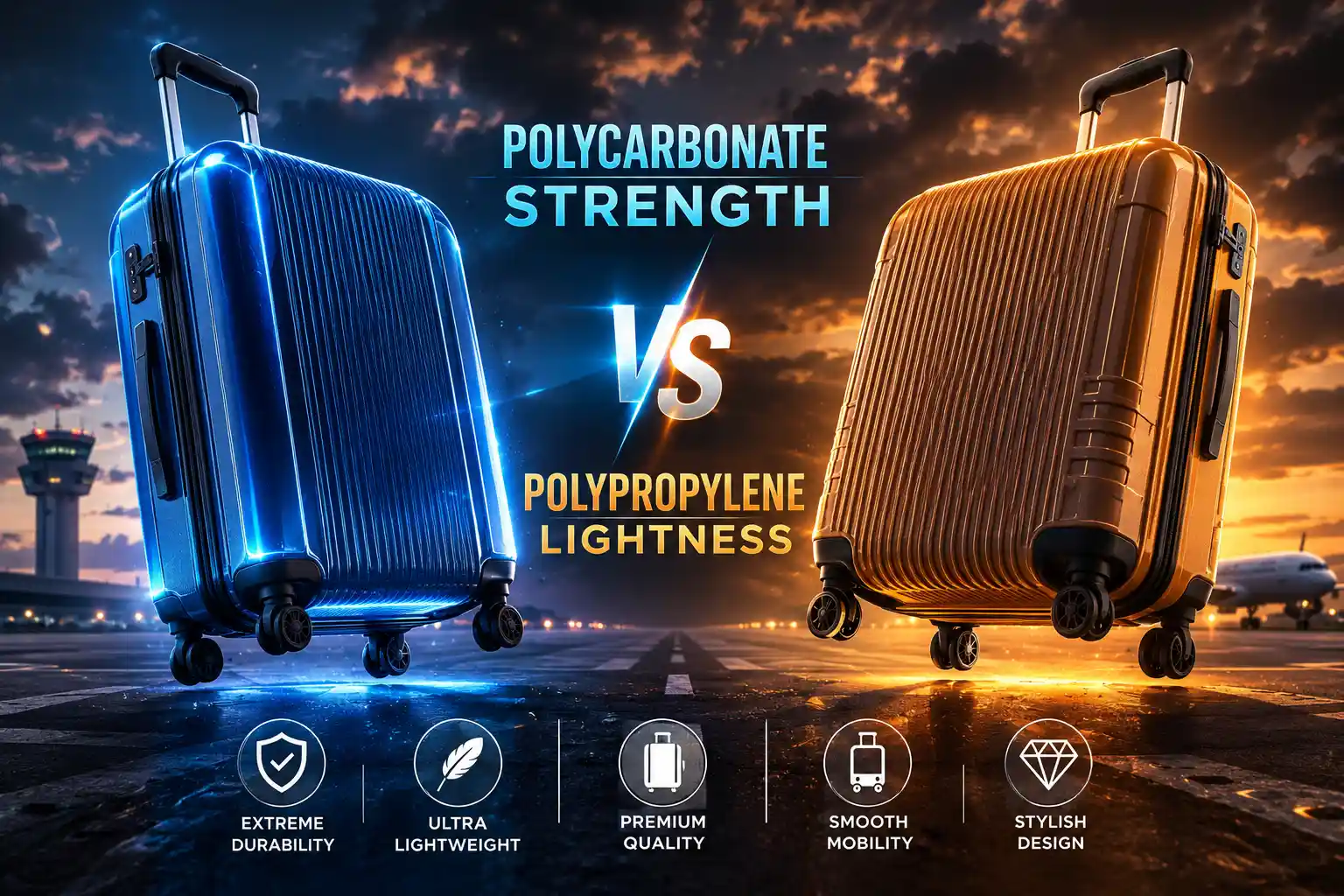
Stand in front of a luggage store, and every second bag looks the same. Same wheels, same zip pulls, same glossy shell. But flip the tag over, and you’ll usually see one of two words: polycarbonate or polypropylene, and picking between polycarbonate vs polypropylene luggage usually comes down to that one line on the label.
That one word tells you more about how the bag will survive Indian airports than the brand name on the front. It affects how much your suitcase weighs before you’ve even packed a single shirt, how it reacts when a baggage handler in Mumbai throws it onto a conveyor belt, and how much you’ll end up paying.
This guide compares polycarbonate vs polypropylene luggage the way you’d actually use that information: not as a lab report, but as a decision you need to make before checkout. By the end, you’ll know exactly which material fits your travel habits, your budget, and the kind of wear and tear your bag is likely to face.
How We Compared Polycarbonate and Polypropylene
This comparison is based on the characteristics that influence long-term luggage performance. I compared polycarbonate and polypropylene for flexibility, impact resistance, scratch resistance, weight, temperature tolerance, appearance, durability, and overall value. Instead of relying only on manufacturer claims, I also considered how these materials perform in everyday travel and checked baggage handling to help readers choose the right luggage material for their budget and travel style.
What Polycarbonate and Polypropylene Actually Are
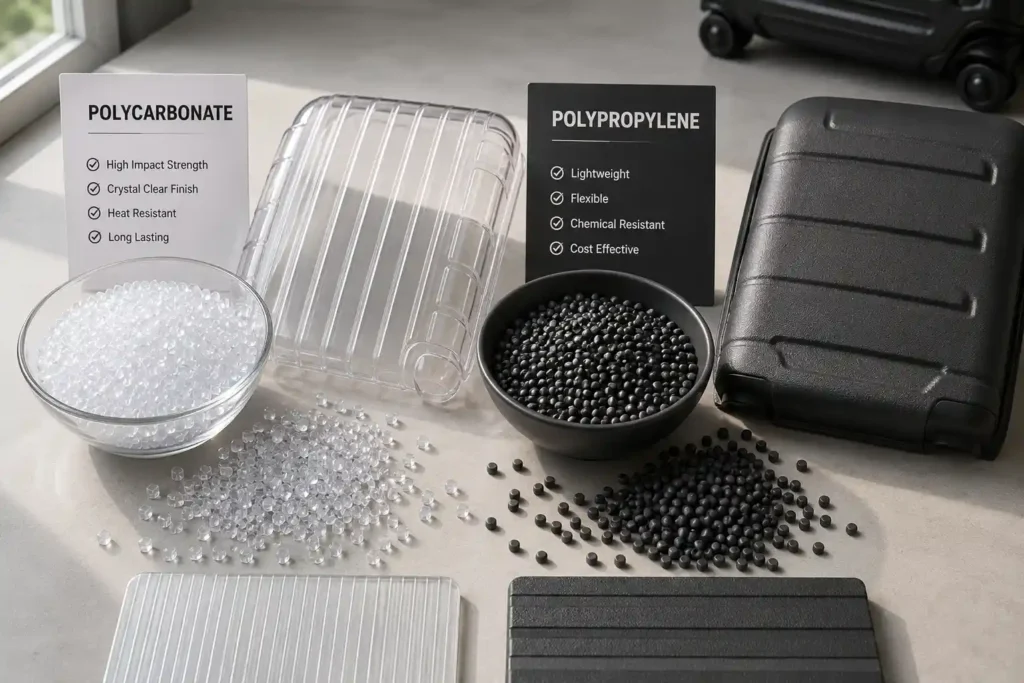
Before comparing them, it helps to know what you’re actually buying. Both are thermoplastics, which means they’re moulded into shape using heat and hold that shape once cooled. That’s where the similarity mostly ends.
Polycarbonate: The Denser, Tougher Plastic
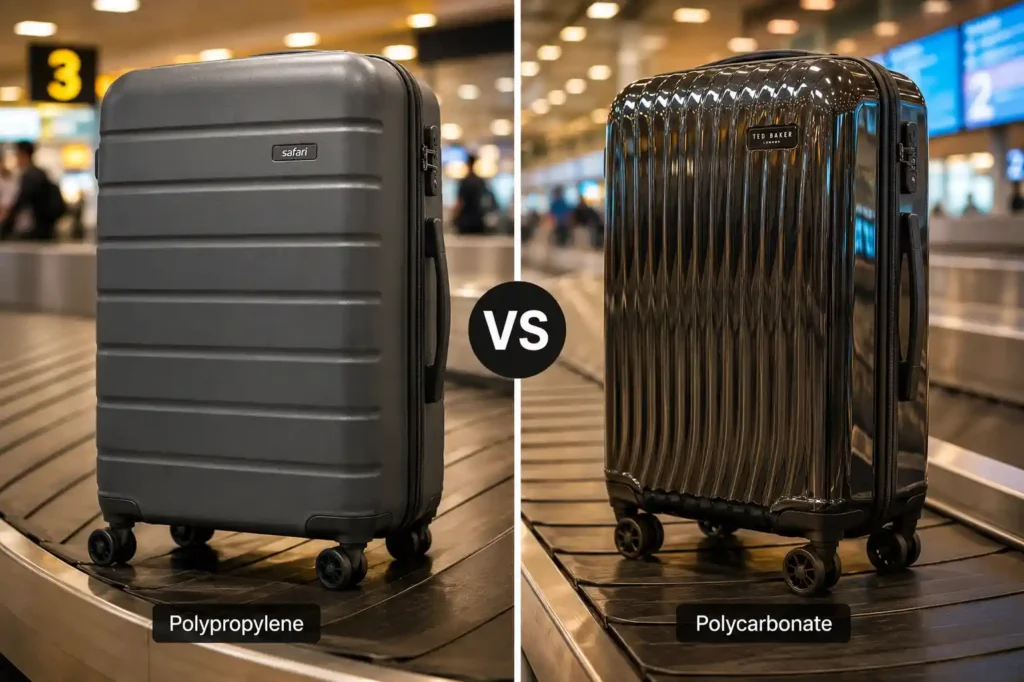
Polycarbonate is the same family of material used in bulletproof glass, safety goggles, and CD cases. In luggage, it’s usually blended with other resins to keep costs manageable while retaining strength. It has a naturally glossy finish, which is why polycarbonate suitcases tend to look more premium straight off the shelf.
Polypropylene: The Lighter, Flexible Plastic
Polypropylene is one of the most widely produced plastics in the world, used in everything from bottle caps to car bumpers. In suitcase shells, it behaves almost like a stiff sheet of plastic that can bend under pressure and spring back rather than crack. That flexibility is its biggest selling point for luggage.
Neither material is “fake” or a downgrade from the other. They’re built for different priorities, and that’s exactly why the comparison matters. A material breakdown from Nasher Miles on polypropylene vs polycarbonate luggage backs this up, noting that brands choose each material based on what a specific product line is meant to prioritise, not because one is simply “better.”
Polycarbonate vs Polypropylene Luggage: Head-to-Head Comparison
Here’s how the two stack up on the factors that actually affect your trip.
Strength and Impact Resistance
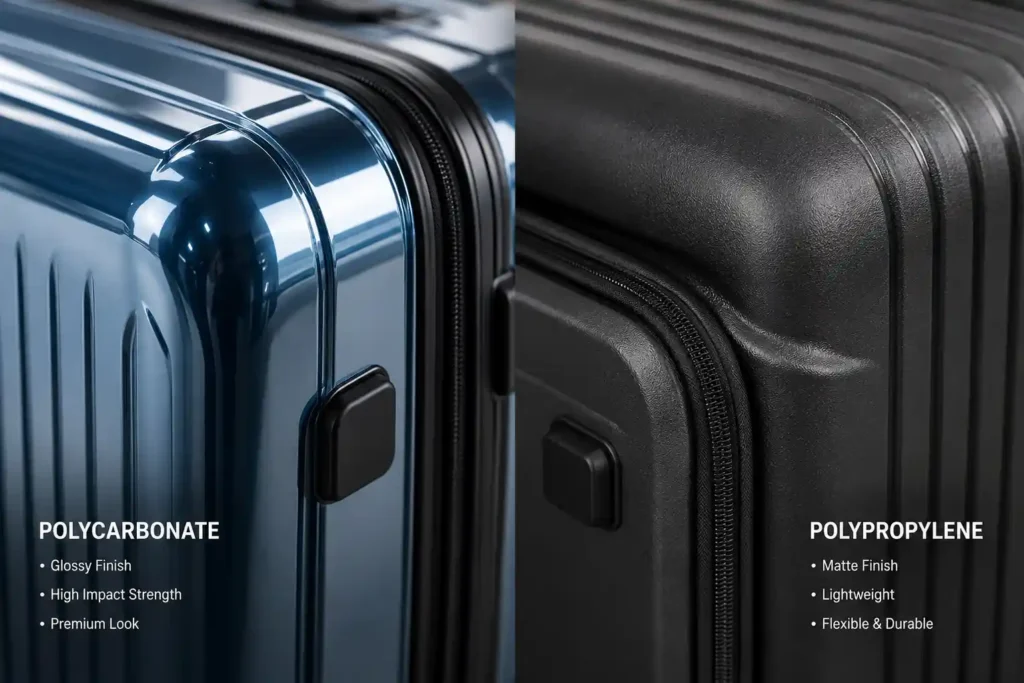
When people ask about polycarbonate vs polypropylene luggage strength, this is usually the factor that settles it. Polycarbonate generally wins here. It’s a rigid material with a higher resistance to cracking under a direct hit, which matters if your bag is going through rough handling on domestic connections or gets stacked under heavier luggage in the hold. Several luggage manufacturers position polycarbonate as their choice for premium, frequent-flyer lines specifically because it holds up better to repeated impact over years of use, a point also echoed in LEVEL8’s guide to polypropylene vs polycarbonate luggage.
Polypropylene doesn’t lose here so much as it wins differently. Instead of resisting impact by staying rigid, it flexes and absorbs the shock, then returns to shape. That means it’s less likely to develop a hairline crack from one hard knock, but it can show dents or scuffing sooner under everyday rough use.
Weight
This is where the polycarbonate vs polypropylene luggage debate tilts the other way, and polypropylene has a real edge. It’s a lighter polymer by nature, and with airlines tightening cabin and check-in limits, every gram counts. A polypropylene cabin bag will typically weigh less empty than a similarly sized polycarbonate one, which leaves you more room to pack before hitting the weight cap.
If you fly IndiGo domestically, for example, the standard cabin allowance sits at 7 kg and check-in baggage is capped around 15 kg on most fares. A lighter empty suitcase means more of that allowance goes toward your actual belongings instead of the shell carrying them.
Price
Polypropylene luggage is almost always the more affordable option. It’s cheaper to manufacture, and brands pass that savings on, which is why you’ll see polypropylene dominate the budget and mid-range segments in India.
Polycarbonate sits higher on the price ladder. You’re paying for the raw material cost, the manufacturing process needed to mould it well, and often a finish that photographs better on a retail shelf.
Look and Finish
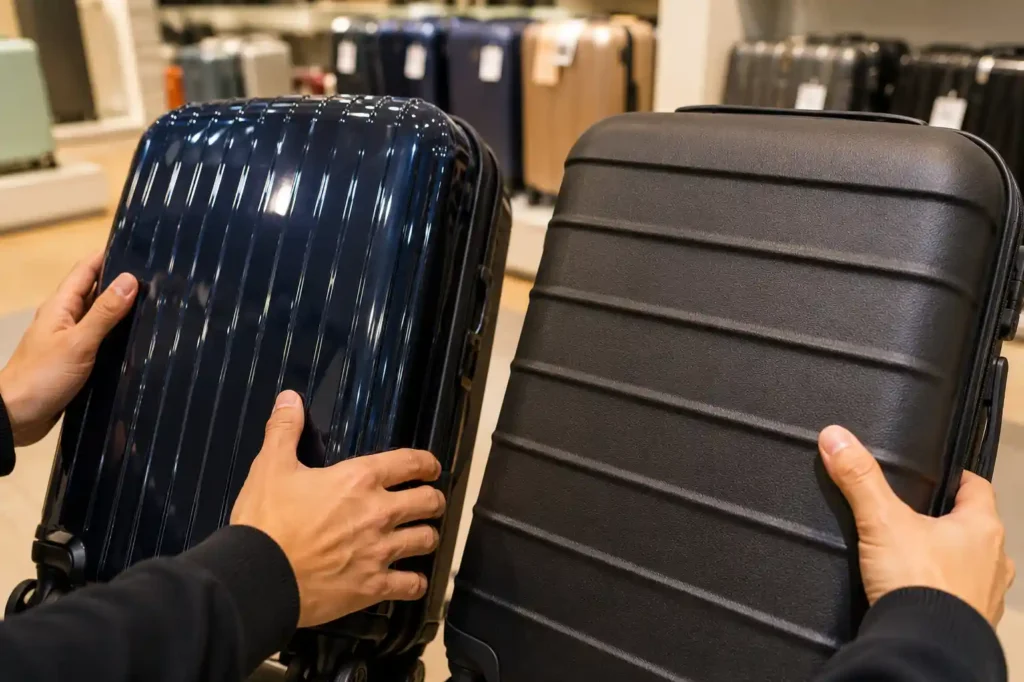
Polycarbonate has a glossy, almost automotive-paint look that many shoppers associate with premium luggage. It photographs well and holds colour vibrantly.
Polypropylene usually comes with a matte or slightly textured finish. It doesn’t scream “premium” the way polycarbonate does, but it also tends to hide scuffs and fine scratches better over time, which matters more once your bag has done a few dozen trips.
Long-Term Durability
Here’s the honest answer: both materials degrade, just differently. Polycarbonate can develop small scratches and, in rare cases of very hard impact, hairline cracks near the wheels or handle mounts. Polypropylene tends to hold its shape well but may show light scuffing and a slightly worn matte texture after years of heavy use.
If you’re checking in bags on almost every trip and your luggage takes a beating from baggage handlers, polycarbonate’s structural rigidity usually pays off over a longer stretch of years. If your bag mostly rides in overhead cabins or gets gentler treatment, polypropylene holds up perfectly well and saves you money upfront.
Quick Comparison Table
| Factor | Polycarbonate | Polypropylene |
|---|---|---|
| Strength under impact | Higher rigidity, resists cracking | Flexes and absorbs shock |
| Weight | Slightly heavier | Lighter |
| Price | Higher | More affordable |
| Finish | Glossy, premium look | Matte, hides scuffs well |
| Best for | Frequent flyers, checked baggage | Budget travel, cabin bags |
| Scratch visibility | More visible on glossy shells | Less visible on matte shells |
Which One Should You Actually Buy?
If you’ve made it this far still wondering, polycarbonate vs polypropylene luggage which is better really depends on how you travel, not on which material sounds more impressive. There isn’t a single correct answer here, and any guide that tells you otherwise is oversimplifying it. What matters is matching the material to how you travel.
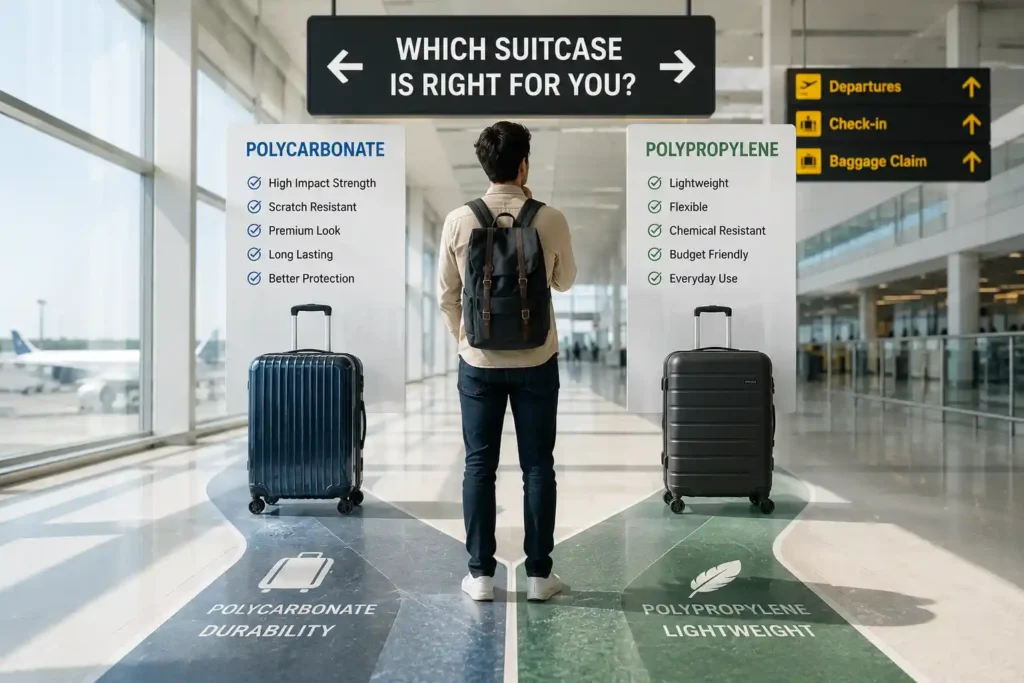
Choose Polycarbonate If:
- You fly often, especially on routes with multiple connections or rougher baggage handling
- You check in your bag on most trips instead of carrying it on board
- You want a suitcase that still looks sharp after two or three years
- You’re fine paying more upfront for something you won’t need to replace soon
Choose Polypropylene If:
- You’re a budget-conscious or occasional traveller
- You mostly use cabin baggage and rarely check in
- You want the lightest possible bag to maximise your packing weight
- You prefer a bag that hides minor scuffs instead of showing every scratch
If you’re still weighing brand and build quality alongside material, it’s worth reading how specific models compare. Safari’s Pentagon Pro 8-wheel trolley bag is a solid example of a polycarbonate build aimed at frequent travel, while Aristocrat’s Liberty cabin polypropylene case shows what a well-made lightweight cabin bag looks like from the other side of the material divide.
A Third Material Worth Knowing: ABS
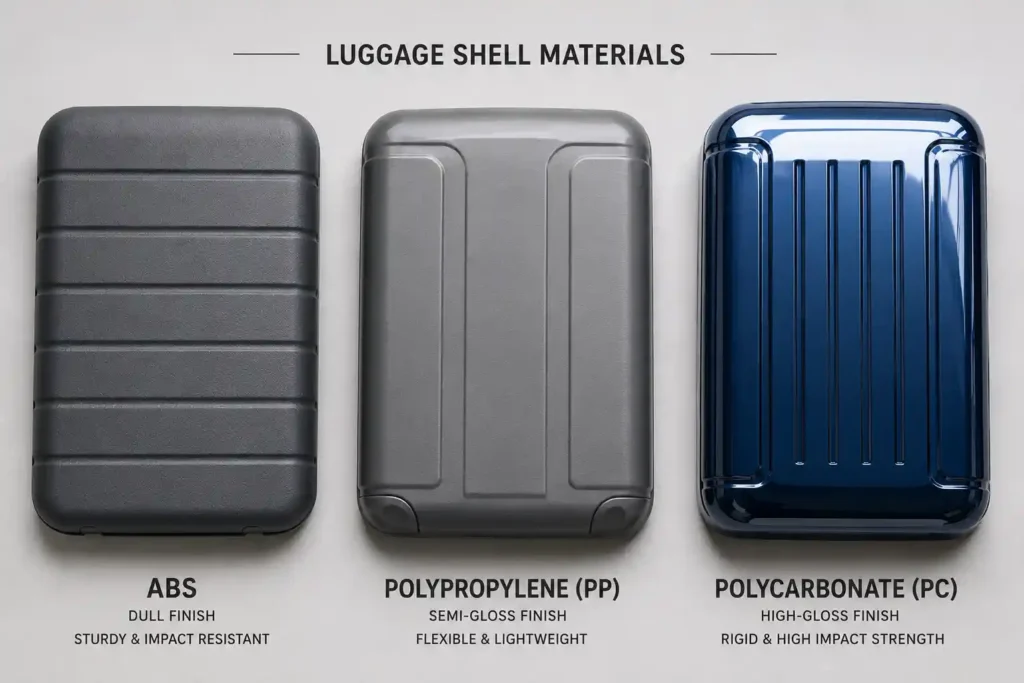
You’ll sometimes see a third material listed on luggage tags: ABS, or acrylonitrile butadiene styrene. It’s generally the most affordable hard-shell option and the least durable of the three, prone to cracking under pressure that polycarbonate or polypropylene would absorb without issue.
Some brands blend ABS with polycarbonate (labelled PC/ABS) to bring the price down while keeping some of polycarbonate’s rigidity. If you see that blend on a listing, treat it as a middle ground rather than pure polycarbonate performance, a distinction also outlined in Safari’s comparison of polypropylene and polycarbonate luggage.
How This Plays Out With Indian Airlines and Travel Conditions
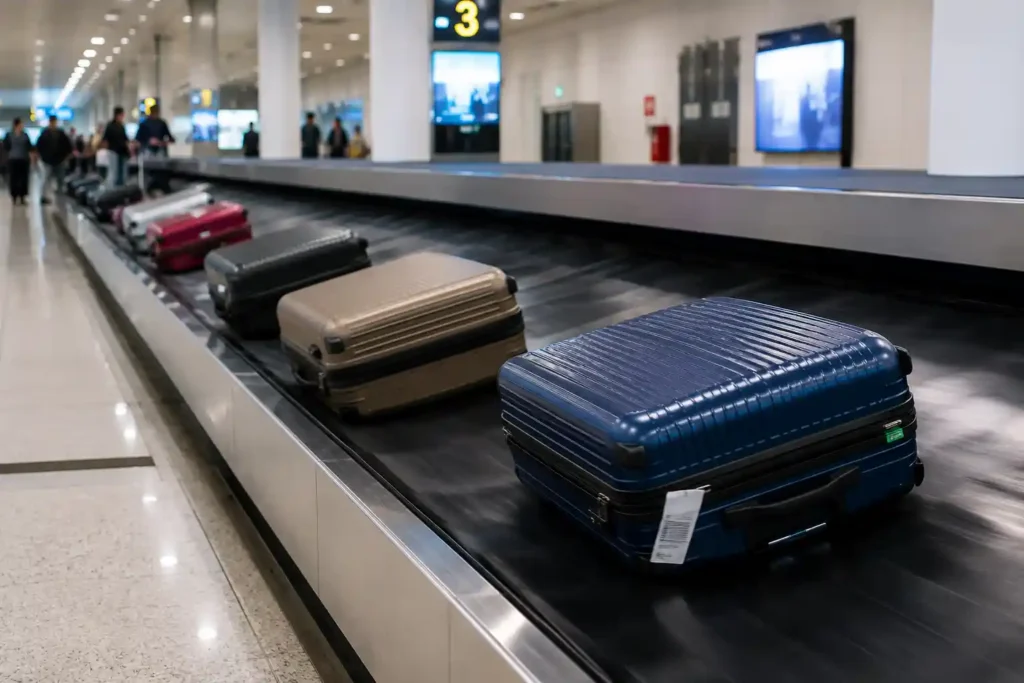
The polycarbonate vs polypropylene luggage choice isn’t just a shelf decision. It shows up the moment your bag hits an Indian airport.
Domestic carriers keep cabin allowances tight. According to the IndiGo Baggage Allowance Guide for 2026, IndiGo caps cabin baggage at 7 kg with a personal item under 3 kg, and standard domestic check-in fares typically include around 15 kg. If you’re flying with a polypropylene cabin bag instead of a polycarbonate one, you’re often saving a few hundred grams of shell weight, which can be the difference between staying under the limit and paying an excess baggage fee at the counter.
Checked baggage tells a different story. Once your suitcase goes into the hold, it’s out of your hands and onto a belt system that isn’t gentle. This is where polycarbonate’s rigidity earns its higher price tag, particularly on longer domestic or international routes where bags get transferred multiple times.
Humidity and heat are also worth a mention, since much of India runs hot for large parts of the year. Polycarbonate handles heat exposure well and doesn’t warp easily in a hot cargo hold or a car boot left in the sun. Polypropylene tolerates heat reasonably too, though its flexibility means it can feel slightly softer in extreme temperatures compared to its usual rigidity in cooler conditions.
Common Mistakes People Make When Choosing Luggage Material
Buying Based on Looks Alone
A glossy polycarbonate shell photographs beautifully online, but if you’re an occasional traveller who checks in a bag twice a year, you might be paying a premium for strength you’ll rarely test. Nobl Travel’s material comparison makes a similar point, framing the decision around travel frequency rather than which material simply looks better in the store.
Ignoring Wheel and Handle Quality
Shell material matters, but a suitcase is a system. Poor-quality wheels or a wobbly telescopic handle will let you down regardless of what the shell is made from. When comparing brands, it’s worth looking at full build comparisons rather than material alone, like this breakdown of Safari vs Aristocrat or this one on Safari vs American Tourister.
Assuming Higher Price Always Means Better Material
Not every expensive suitcase uses pure polycarbonate, and not every affordable one is made from thin, flimsy polypropylene. Read the product specifications directly instead of assuming price reflects material quality. Comparisons like Samsonite vs American Tourister or VIP vs American Tourister can help you see how pricing and material choices actually line up across popular Indian brands.
Overlooking Warranty Terms
Whatever material you choose, check what the manufacturer actually covers. Cracks from impact are sometimes excluded from warranty even on premium polycarbonate lines, so read the fine print before you assume you’re covered.
Maintenance Tips for Both Materials
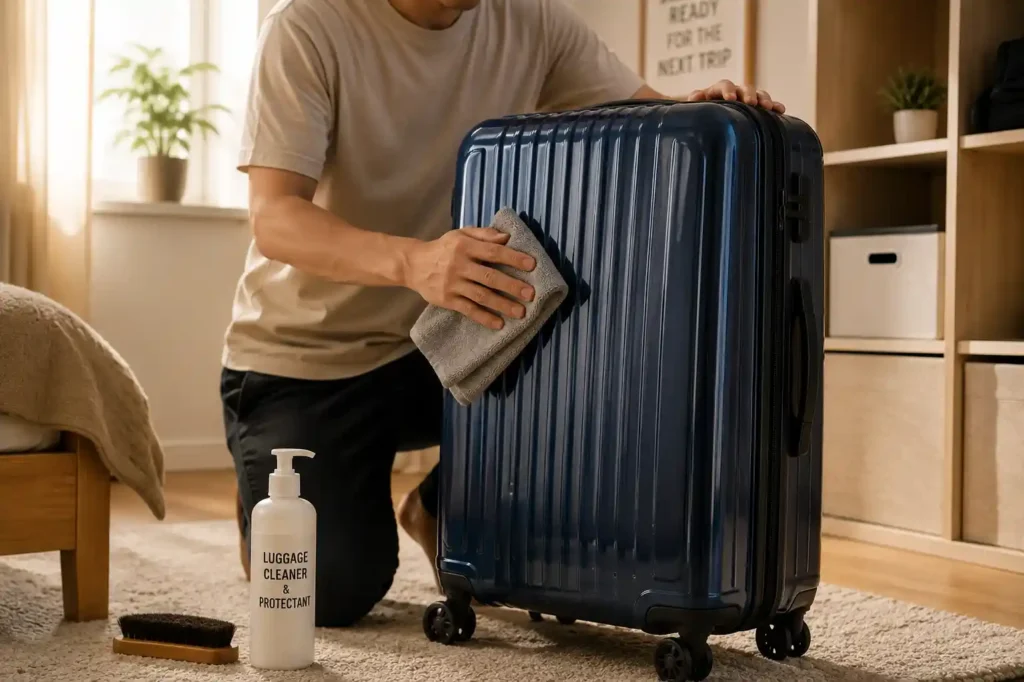
A little care extends the life of either material considerably.
For Polycarbonate:
- Avoid dragging the bag across rough concrete, which can scuff the glossy finish
- Wipe with a soft, damp cloth rather than abrasive cleaners
- Store upright rather than stacked under heavier items when not travelling
For Polypropylene:
- Avoid prolonged exposure to direct sunlight, which can gradually affect the matte finish
- Check zippers and seams periodically, since flexible shells put slightly more strain on stitching points
- Clean with mild soap and water, avoiding solvents that can dull the surface
Conclusion
Polycarbonate and polypropylene aren’t competing to be the “best” material in any absolute sense. They’re built for different jobs. Polycarbonate rewards frequent flyers who check in bags often and want a suitcase that still looks sharp years later. Polypropylene rewards travellers who want a light, affordable bag that handles everyday trips without fuss.
The right move is matching the material to how often you fly, how you handle your baggage, and what you’re willing to spend upfront. Once you know that, the polycarbonate vs polypropylene luggage decision stops being a guessing game and becomes a straightforward call based on your own travel pattern.
If you’re still comparing specific brands before you buy, it’s worth checking how the material choice plays out in real product lines, such as this look at Safari vs Kamiliant or Nasher Miles vs American Tourister.
Why You Can Trust This Comparison
Polycarbonate and polypropylene are two of the most popular luggage materials, but they perform differently under real travel conditions. This comparison evaluates flexibility, impact resistance, scratch resistance, weight, durability, and value to help you determine which material is the better choice for your budget and travel frequency.
FAQs (Because People Keep Asking)
1. Is polycarbonate or polypropylene better for checked baggage?
In the polycarbonate vs polypropylene luggage comparison, polycarbonate is generally the stronger choice for checked baggage. Its rigidity holds up better against the repeated impact and stacking that happens in an aircraft hold, especially on routes with multiple connections.
2. Which material is lighter, polycarbonate or polypropylene?
Polypropylene is typically lighter. This makes it a popular choice for cabin baggage, where airline weight limits are strict and every gram of shell weight cuts into your packing allowance.
3. Does polycarbonate luggage crack easily?
Polycarbonate is more resistant to cracking than budget materials like ABS, but it isn’t indestructible. Extremely hard, direct impacts can still cause hairline cracks, particularly near wheel housings or corners.
4. Is polypropylene luggage good quality?
Yes, for its price point. Polypropylene flexes under pressure instead of cracking, which makes it a durable and practical option for regular travel, especially for cabin-sized bags and shorter trips.
5. Which is more expensive, polycarbonate or polypropylene luggage?
Polycarbonate luggage is usually more expensive due to material and manufacturing costs. Polypropylene sits in the budget to mid-range segment, making it a common choice for cost-conscious buyers.
6. Can I identify the material before buying a suitcase online?
Most Indian retailers list the shell material in the product specifications. Look for terms like “PC,” “polycarbonate,” “PP,” or “polypropylene” in the description, and cross-check with brand comparisons if the listing is unclear.
Ready to Choose Your Next Trolley Bag?
Whether you’re leaning toward the rigid strength of polycarbonate or the light, budget-friendly build of polypropylene, the right suitcase is out there for how you actually travel. Browse SwoopCart’s trolley bag collection to compare models side by side and find one that fits your next trip.
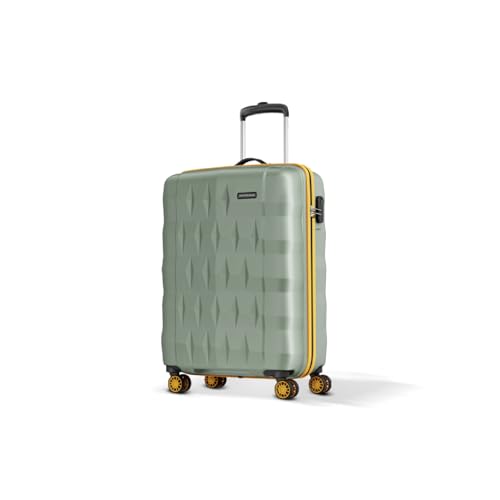
- Durable polycarbonate case: Crafted with a tough, scratch-resistant and water-resistant polycarbonate case designed to o…
- Lightweight travel companion: Designed in a compact, lightweight format, making it a convenient luggage choice for short…
- Smooth, stable 8-wheel mobility: Equipped with dual-spinner wheels that enable smooth, stable movement and effortless 36…
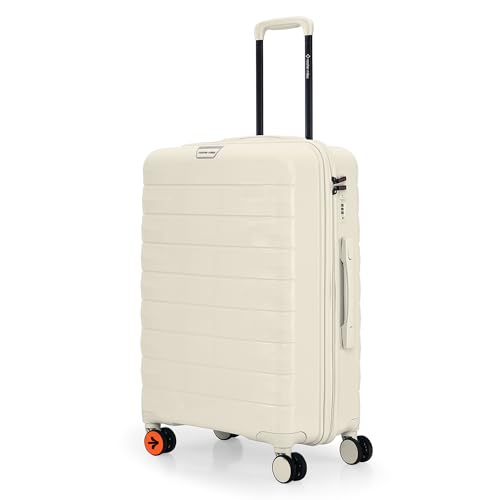
- Medium Size Check-in Trolley Bag: This 65 cm medium trolley bag is perfectly sized for week-long holidays and family get…
- Durable Polypropylene Hard Shell Body: Engineered from premium polypropylene material with a textured scratch-resistant …
- Smooth 360-Degree 8-Wheel Spinner System: Equipped with eight multi-directional double spinner wheels offering full 360-…
Research & References
This article is based on official manufacturer specifications, warranty information, product documentation, airline baggage policies where applicable, and publicly available industry resources. Customer reviews and market trends are also considered to provide balanced, accurate, and up-to-date recommendations.
Our Editorial Process
Every article published on SwoopCart is independently researched to help travelers make informed buying decisions. I review official product specifications, compare features across leading luggage brands, analyze verified customer experiences, and update articles whenever important product information changes.
If an article contains affiliate links, they never influence recommendations or rankings. Products are selected based on their overall quality, performance, practicality, and value for money.