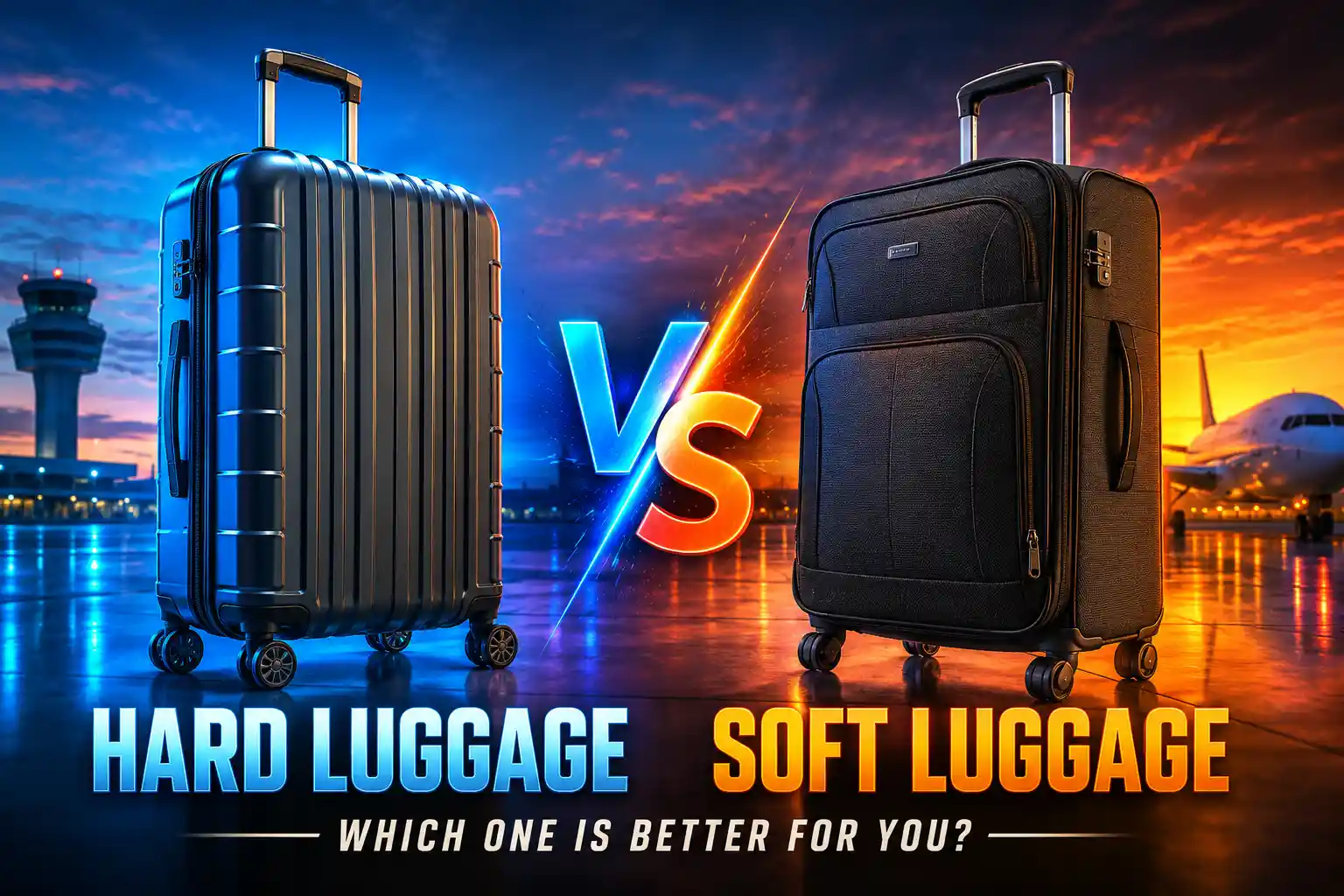
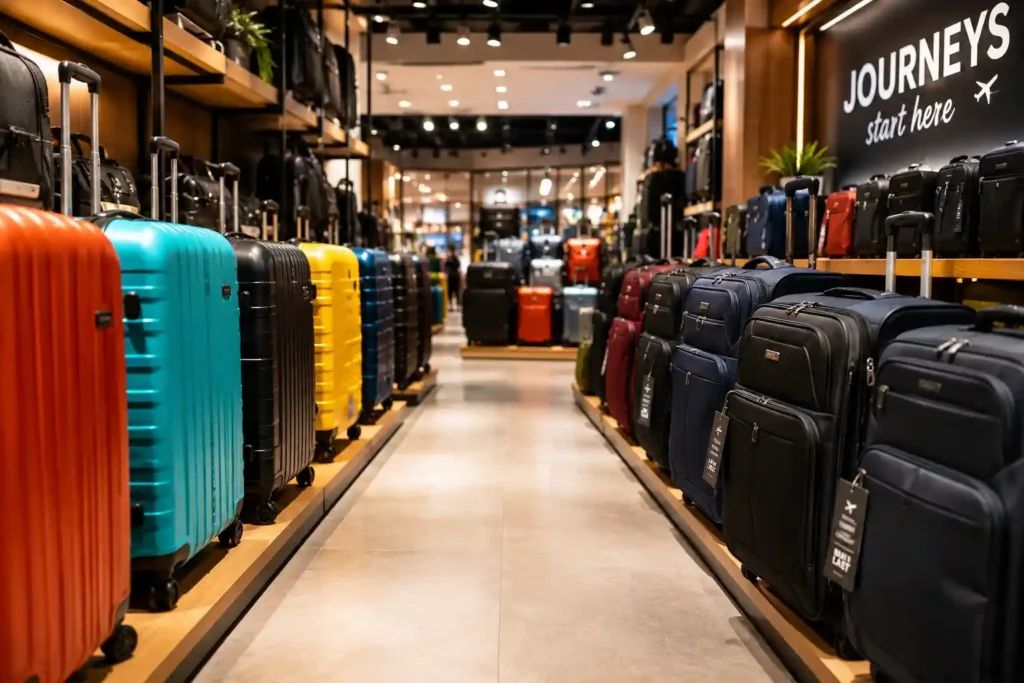
Standing in a luggage store, staring at rows of suitcases, feels a bit like picking a phone plan. Everything sounds fine until you actually need it to work. That is the real question behind hard luggage vs soft luggage.
Both types get you through airports. Both survive the odd bump from a trolley. But they behave very differently once your flight gets delayed, your bag gets tossed onto a conveyor belt, or you try to squeeze in one more souvenir.
This guide breaks down hard vs soft luggage the way a well-travelled friend would, not a spec sheet. We will walk through the Soft Luggage vs Hard Luggage Pros and Cons in plain language, covering where each type struggles and how to match your choice to your travel style.
A suitcase, or travel suitcase as most people call it, is one of the most-used pieces of travel gear you own, so it is worth getting right. No fluff, no fabricated numbers, just a clear comparison you can use before you spend your money.
How We Compared Hard and Soft Luggage
To fairly compare hard and soft luggage, I evaluated both types based on the factors that matter most in real travel. This includes durability, impact protection, weight, packing flexibility, weather resistance, scratch visibility, storage convenience, and airline handling. I also considered how each luggage type performs for business trips, family vacations, international travel, and frequent flyers to explain which option is better for different travel needs rather than declaring one as the overall winner.
What Is Hard-Shell Luggage?
Hard-shell luggage is built around a rigid outer shell, usually molded from a single sheet of plastic. Instead of stitched fabric panels, you get one continuous surface that wraps around your belongings like a shield.
Most hard-shell suitcases today use polycarbonate, polypropylene, or ABS (acrylonitrile butadiene styrene). Each material behaves a little differently. According to Travelpro’s shell material guide, a rigid shell built from any of these three plastics is designed to withstand rough baggage handling while keeping suitcase contents protected.
Polycarbonate tends to be the toughest of the three, since it flexes under pressure and springs back rather than cracking. Polypropylene sits at the lighter, more budget-friendly end of the spectrum, while ABS is common in entry-level suitcases.
If you want a deeper material-by-material breakdown, our guide on Polycarbonate vs Polypropylene Luggage goes into exactly how these two plastics compare on weight, flex, and long-term wear. Weighing the hard shell luggage advantages and disadvantages side by side, as we do below, makes it much easier to see where this style genuinely earns its price tag.
Key Features of Hard-Shell Luggage
Hard-shell suitcases usually share a few traits. The shell is fully enclosed, so there are no exposed seams for rain or airport grime to sneak through. Most models use spinner wheels that rotate 360 degrees, which makes them glide rather than drag.
This rolling design is why spinner luggage, essentially wheeled luggage that moves in any direction, has become the default across both hard and soft categories. Many also come with an integrated TSA lock built into the zipper or latch mechanism.
The surface finish matters too. Glossy shells look sharp on day one but show scuffs quickly. Matte or textured finishes offer better scratch resistance over years of use.
Pros of Hard-Sided Luggage
Hard luggage protects fragile items well. A rigid shell resists crushing better than fabric, which matters if you are packing a bottle of wine, a camera, or gifts that cannot survive a rough baggage handler’s grip.
It also handles water better. A sealed shell keeps light rain and puddle splashes out, since there is no woven fabric to soak through. Most hard-shell suitcases look polished too, with clean lines that read as premium rather than practical.
Security is another quiet advantage. Zipperless hard-shell models, which use a snap-latch system instead of zippers, are harder to force open or slash, which appeals to travelers who worry about tampering in transit.
Cons of Hard-Sided Luggage
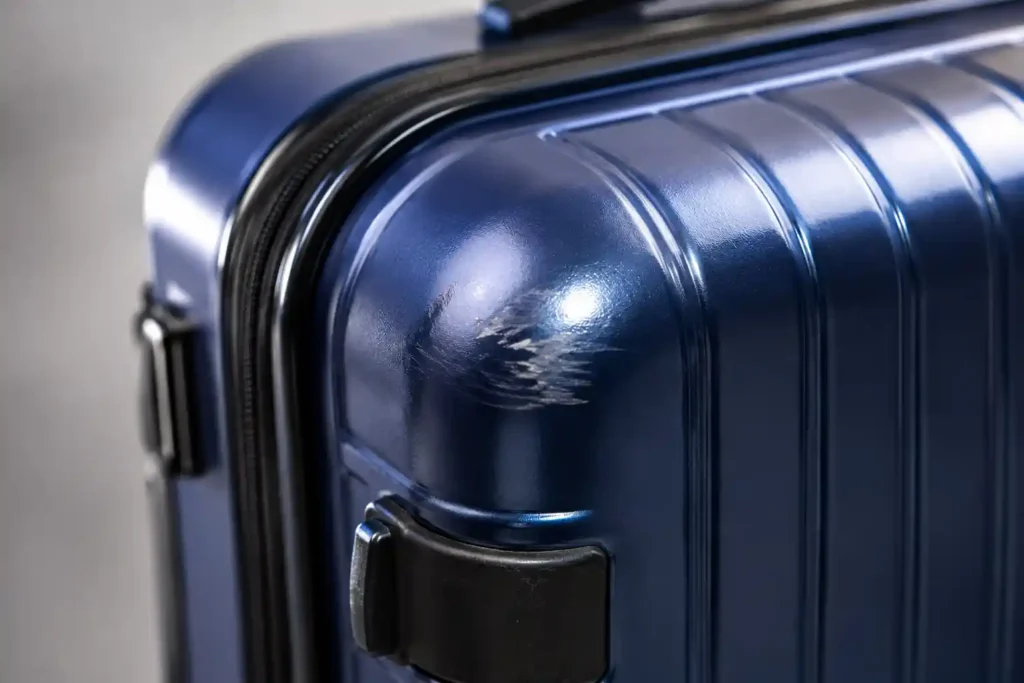
Hard-shell luggage cannot expand. What you pack is what you get, since the shell holds a fixed shape. This becomes a problem the moment you buy something on your trip and need extra room on the way home.
It also lacks exterior pockets. You cannot tuck a boarding pass or a water bottle into an outside pocket, so everything goes inside the main compartment.
And while polycarbonate resists cracking well, cheaper polypropylene or ABS shells can crack under a hard enough impact, especially in extreme cold where plastics turn brittle.
This is worth remembering when you are judging hard suitcase vs soft suitcase durability side by side, since the shell grade matters as much as the shell type.
What Is Soft-Sided Luggage?
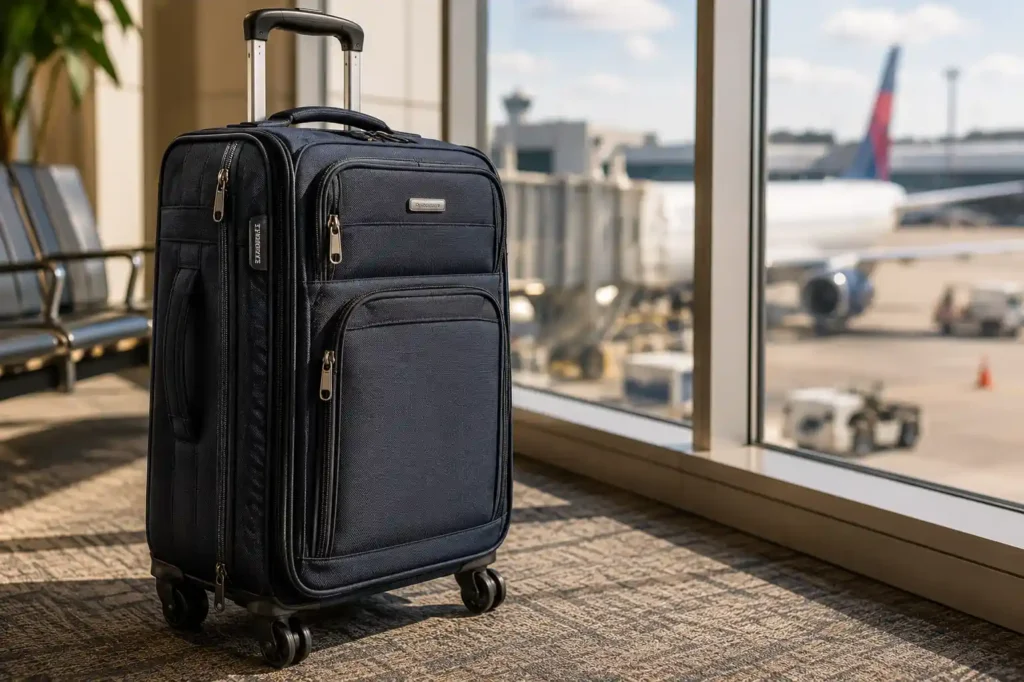
Soft-sided luggage swaps the rigid shell for woven fabric panels stretched over a lightweight internal frame. Instead of one molded surface, you get stitched fabric, zippers, and often a mix of exterior and interior pockets. Some travelers still refer to this simply as hard luggage vs fabric luggage, since the fabric shell is really the defining feature.
The fabric choice makes a real difference here. Ballistic nylon is a thick, high-tenacity nylon originally developed for military use, and it remains one of the toughest fabrics used in luggage today, prized for its long-term durability even though it costs more than lighter alternatives. Cordura nylon is a lighter option with excellent abrasion resistance, while polyester remains the most common and most affordable choice, especially at higher denier counts. Because of this range of fabrics, soft-shell suitcase benefits can vary quite a bit depending on which material a brand chooses to build with.
Key Features of Soft-Sided Luggage
Soft-sided bags almost always include exterior pockets, which is a small thing that saves a surprising amount of hassle at security checkpoints. Many models also expand by a few centimeters through a zippered gusset, giving you room to grow mid-trip.
The frame inside a soft-sided suitcase is usually a lightweight metal or plastic skeleton, just enough structure to keep the bag’s shape without adding real weight.
Pros of Soft-Shell Luggage
The biggest advantage is flexibility, both literal and practical. Soft-sided bags squeeze into tight overhead bins and car trunks in a way hard-shell suitcases simply cannot. They also tend to be lighter, since fabric weighs less than a molded plastic shell of the same size, which is why lightweight luggage seekers usually gravitate toward this style. This flexibility also makes soft-sided bags ideal for flexible packing when your itinerary keeps changing, and a popular pick for business travel, where a laptop sleeve and a quick-access pocket often matter more than a rigid shell.
Expandability is another strong point. That extra zip-out gusset can be the difference between a bag that closes and one that does not, especially after a shopping-heavy trip. This is the clearest real-world case of expandable soft luggage vs hard luggage, since only one of the two can actually grow to fit more. Exterior pockets add convenience too, letting you grab your passport or a phone charger without unzipping the whole bag.
It Is Essential to Know, Nevertheless, That Soft-Shell Luggage Also Possesses Its Disadvantages
Fabric offers less protection against sharp impacts than a rigid shell. A soft-sided bag can absorb a drop reasonably well, but a sharp corner hitting concrete can still tear the fabric or dent whatever is inside.
Water resistance is also weaker unless the fabric has a specific coating. Seams and zippers are natural entry points for rain. And soft-sided bags are technically easier to cut into than a hard shell, though modern lockable zippers reduce this risk considerably.
Hard Luggage vs Soft Luggage: Quick Comparison Table
Here is a quick hard luggage vs soft luggage weight comparison, laid out alongside the other factors that usually decide the purchase.
| Factor | Hard-Shell Luggage | Soft-Sided Luggage |
|---|---|---|
| Protection from impact | Strong, rigid shell | Moderate, fabric flexes |
| Water resistance | Better, sealed shell | Depends on coating |
| Weight | Slightly heavier on average | Often lighter |
| Expandability | None | Usually 2 to 3 inches |
| Exterior pockets | Rare | Common |
| Security | Snap-latch resists prying | Depends on zipper quality |
| Style | Sleek, modern | Classic, versatile |
| Storage at home | Bulkier, does not compress | Easier to store flat |
Other Factors to Consider Before Buying
The hard-shell vs soft-sided debate does not end with pros and cons lists. A few practical details often decide the real winner for your specific routine.
1. Weight Limits
Most international economy tickets allow a checked bag weighing around 23 kg, with a hard ceiling near 32 kg per bag on many routes, largely because airline baggage handling systems are built around a safety limit for the people lifting them. This guidance comes from IATA’s passenger baggage rules, which most major airlines follow in some form. An empty hard-shell suitcase can weigh a kilogram or two more than a similarly sized soft bag, which eats into your packing allowance before you have added a single sock.
2. Wheel Type
Almost all modern wheeled luggage, hard or soft, now uses spinner wheels as the default. What differs is wheel count and mounting quality. Double-wheel spinners (eight wheels total) tend to roll straighter and survive rough pavement better than single-wheel four-wheel setups.
3. Storage at Home
Soft-sided luggage often compresses slightly when empty, sliding under a bed or into a closet shelf more easily. Hard-shell suitcases hold their shape permanently, so they need a dedicated corner or shelf.
4. Cleaning
Hard shells wipe clean with a damp cloth in seconds. Fabric luggage needs a bit more effort, sometimes a mild detergent and a soft brush, especially if it has picked up grime from an airport floor.
5. Packing Style
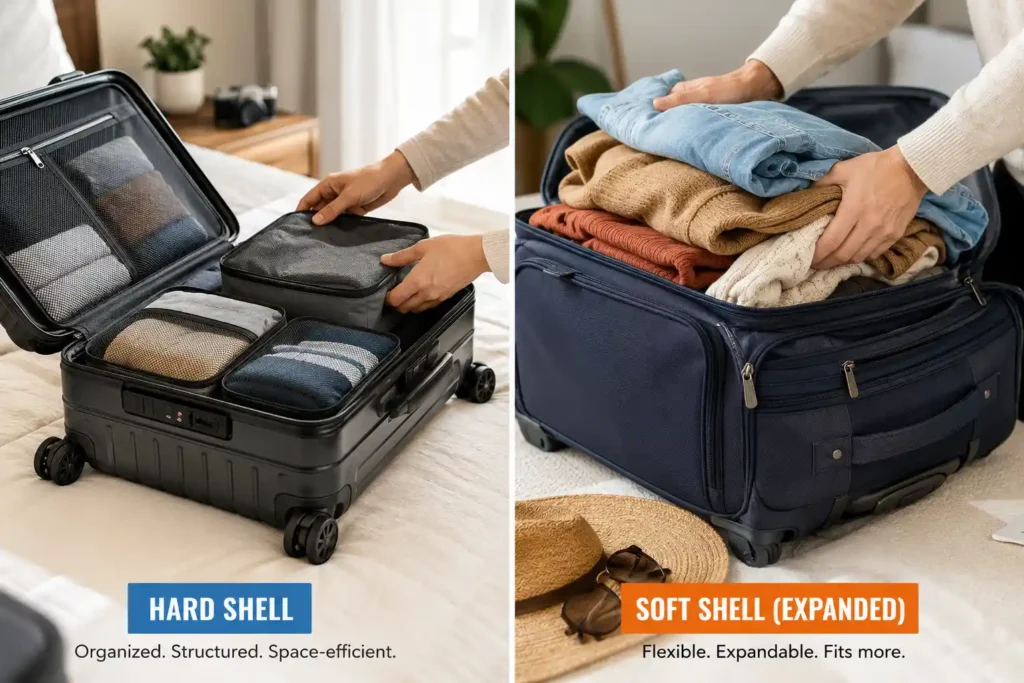
If you are a rigid packing-cube person who likes everything in its place, a hard shell’s fixed shape works in your favor. If you tend to stuff in one more item at the last minute, a soft-sided bag’s expansion zip is genuinely useful. Your travel packing habits, more than any spec sheet, usually decide which shape suits you best.
6. Security
Hard-shell suitcases with snap latches are harder to pry open quietly. Soft-sided bags rely more on zipper quality, so look for lockable, double-pull zippers paired with a TSA-approved lock if you travel internationally often.
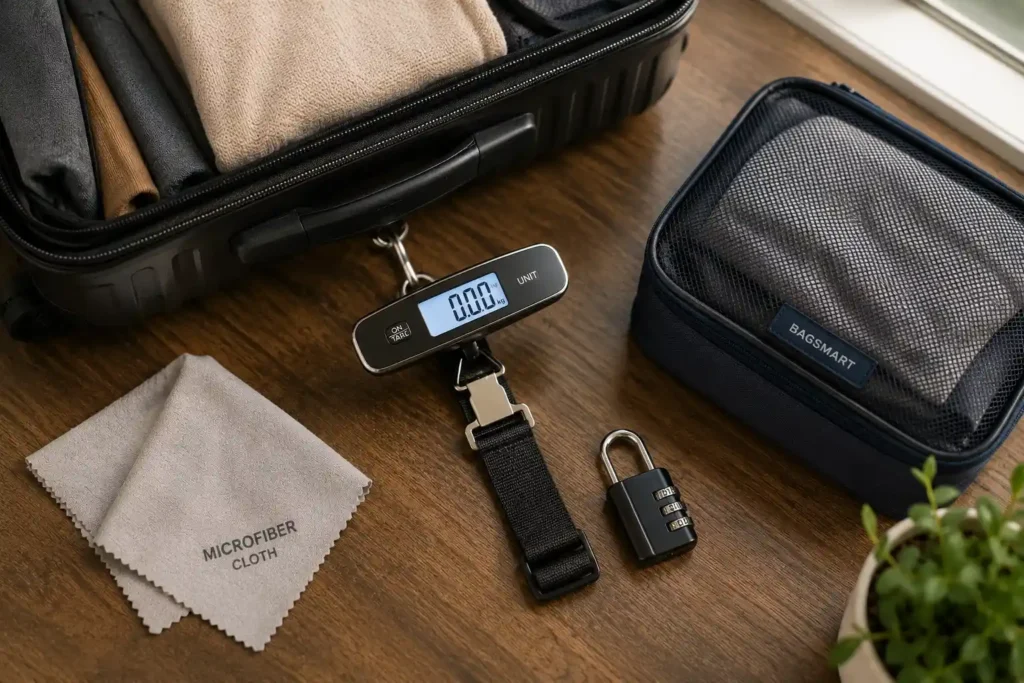
Factors for Choosing the Right Hard vs Soft Luggage
Beyond the checklist above, your travel pattern itself should guide the decision.
Type of Travel
Frequent flyers who check bags often benefit more from a hard shell’s impact resistance, since checked luggage takes the brunt of conveyor belts and cargo holds.
Road trippers and train travelers, who load and unload bags by hand more gently, can lean toward soft-sided bags without much risk. This is really the short answer to best luggage for air travel hard or soft: match the bag to how roughly your airline handles it, not just how it looks in the store.
Items You Typically Pack
Fragile electronics, glass bottles, or delicate souvenirs are safer inside a rigid shell. Clothes, shoes, and soft goods do just fine in a fabric bag.
Storage Space
If your home has limited closet space, a soft-sided bag that compresses slightly will be easier to live with between trips.
Weight Restrictions
Budget airlines with strict cabin or checked weight caps make every gram count. A lighter soft-sided bag can buy you extra packing weight before hitting a surcharge.
Weather Conditions

Travelers heading to consistently wet climates, coastal cities, or monsoon-season destinations benefit from a hard shell’s better resistance to moisture seeping in through seams. A rainy autumn Europe trip is a good example of this, and it is also where the waterproof hard luggage vs soft luggage question matters most, since neither type is truly waterproof but a sealed shell comes noticeably closer.
A Practical Checklist Before You Buy
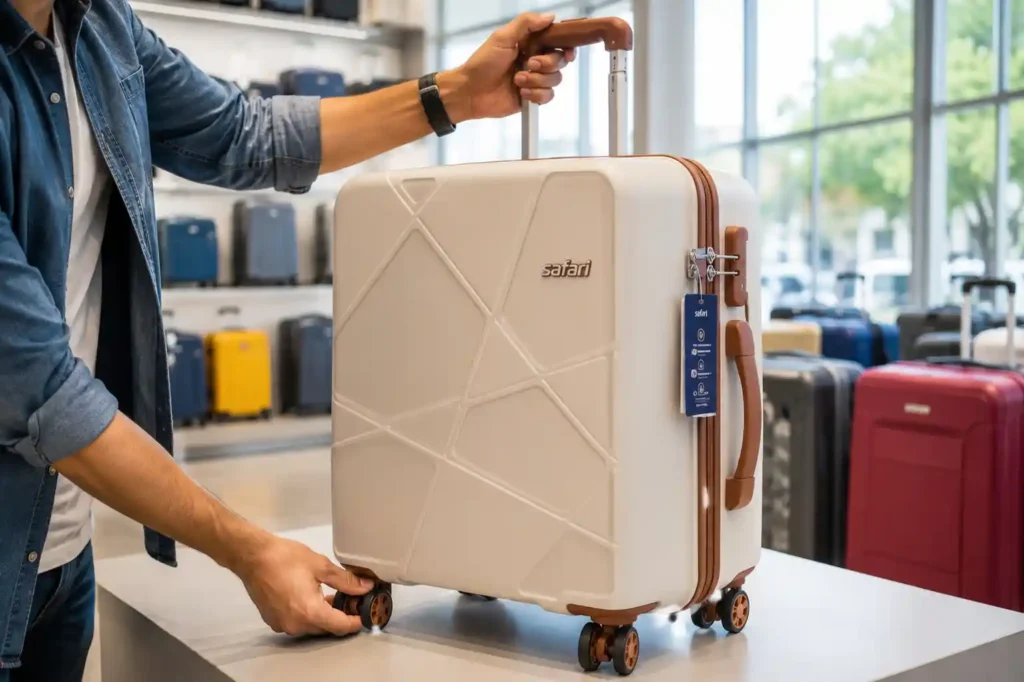
Once you have narrowed down your Hard Luggage vs Soft Luggage decision, run through these questions with the actual suitcase in front of you, not just a product photo.
How does it open? A clamshell that opens flat, or a front-loading style with a laptop pocket?
Is it easy to organize? Good luggage organization starts with interior dividers, zip pockets, and compression straps, so check for all three.
Will it protect your things? Press on the shell or fabric near the corners to see how much it flexes.
How heavy is it? How much does it carry? Weigh the empty bag yourself rather than trusting a listed spec, since real-world weights can vary.
Is it stylish? Not essential, but you will be carrying it through crowded terminals for years.
Any difference with the handles, zippers, and wheels? Wiggle the telescopic handle, run the zippers, and spin every wheel by hand.
How about extras, like luggage locks and tags? A built-in TSA lock and a sturdy nametag holder are small details that save real hassle at security.
Tips on Usage of Hard and Soft Luggage
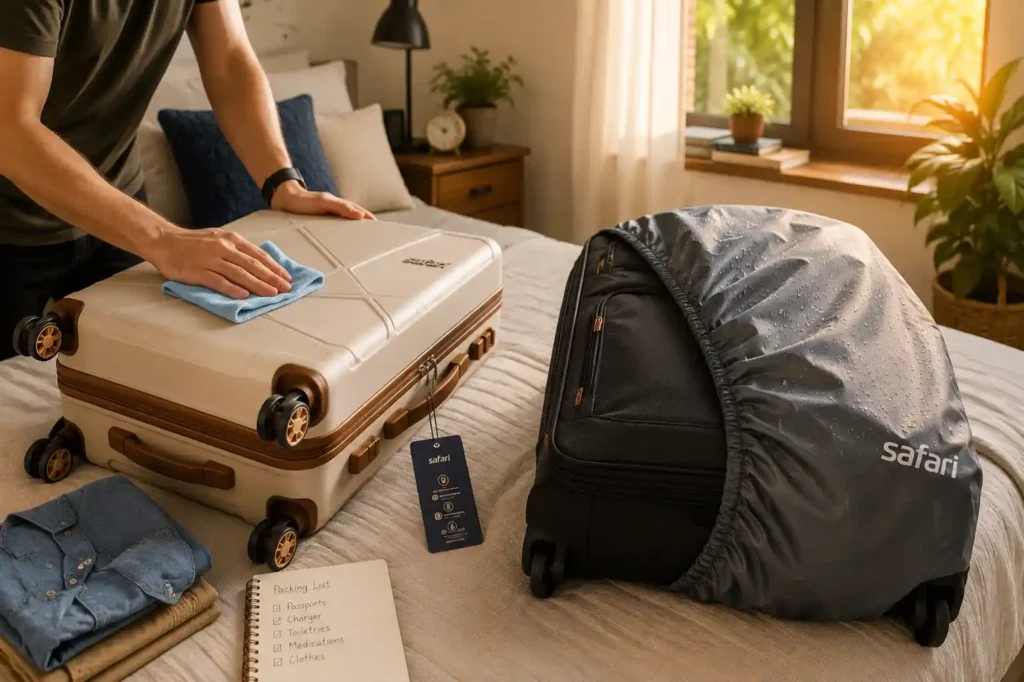
Whichever side of the Hard Luggage vs Soft Luggage decision you land on, a few simple care habits keep the bag performing well and protect the luggage capacity you paid for.
For Hard-Shell Luggage
Avoid overpacking to the point where the shell bulges, since a stressed latch is more likely to pop open mid-transit. Wipe down the shell after wet weather rather than letting moisture sit in the seams around the zipper or latch. A soft luggage cover can protect a glossy finish from scuffs on long trips.
For Soft-Sided Luggage
Use the exterior pockets for items you need quick access to, like a passport wallet or a phone charger, so you are not digging through the main compartment at security. Check zippers periodically for fraying, since that is usually the first point of wear. If your bag has a rain cover, use it on wet travel days, since fabric absorbs moisture faster than a sealed shell.
Hard Luggage vs Soft Luggage: Final Verdict
So, is hard luggage better than soft luggage overall? Not quite. Neither type wins outright, since it genuinely depends on how you pack, how you travel, and what you are carrying.
Choose hard luggage if you:
- Want the best protection for electronics and fragile items
- Fly frequently and check bags often
- Prefer a modern, premium appearance
- Need better water resistance
Quality hard-shell luggage is widely regarded for its impact protection and long-term luggage durability, particularly when built from polycarbonate.
Choose soft luggage if you:
- Need expandable packing space
- Want lighter, more flexible storage
- Prefer exterior pockets for quick access
- Travel mainly by road or train
High-end soft-sided luggage is valued for its flexibility and packing convenience, especially when built from ballistic nylon or high-denier polyester. As Travel Sentry notes, a well-made soft-sided suitcase can take a fair amount of bashing and abrasion without any real damage to the bag or its contents.
Recommended Hard Luggage Brands
- American Tourister
- Samsonite
- MOKOBARA
- Nasher Miles
For frequent travelers especially, a polycarbonate or polypropylene hard-shell suitcase from one of these brands offers a solid mix of design, durability, and long-term value. If you are torn between two specific brands, our comparisons on Safari vs American Tourister, Safari vs VIP, and American Tourister vs Nasher Miles dig into how these specific names stack up on price, warranty coverage, and build quality.
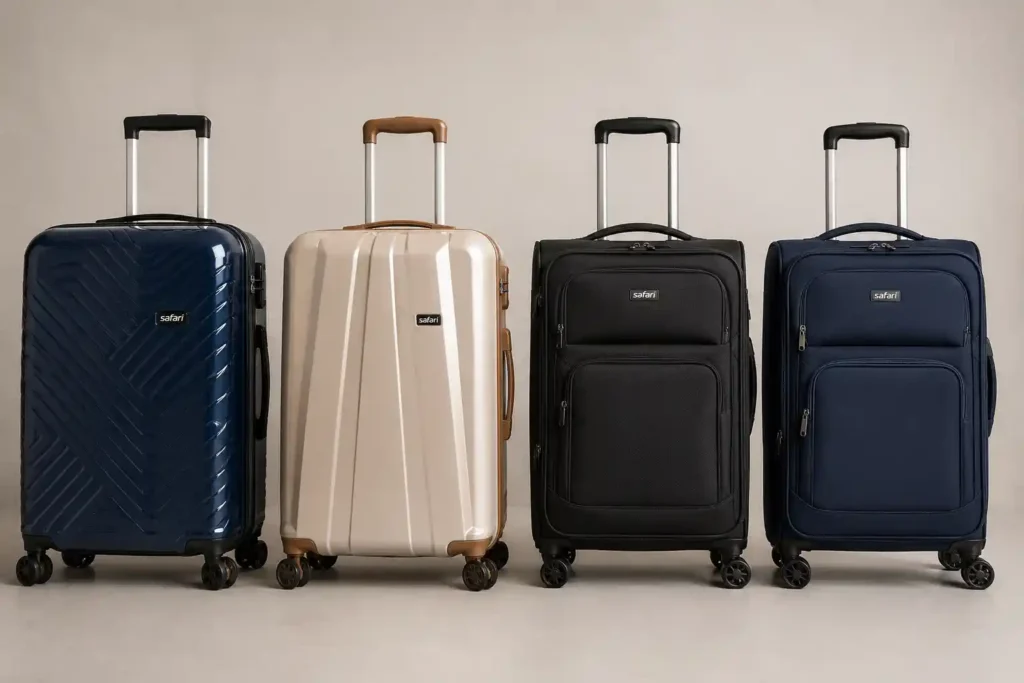
Conclusion
Hard Luggage vs Soft Luggage is not really a fight with a single winner. It is a question of matching the suitcase to your actual habits. If you check bags often, carry breakable items, or travel through wet climates, a hard-shell suitcase earns its keep as your checked luggage.
If you value flexibility, exterior pockets, and lighter overall weight, soft-sided luggage will likely serve you better trip after trip, whether it is riding in the cabin as carry-on luggage or checked at the counter.
Whichever way you lean, check the material, test the zippers or latches, and weigh the bag yourself before you buy. A suitcase is not a small purchase, and it is one you will be dragging through airports for years to come.
Why You Can Trust This Comparison
Hard and soft luggage are designed for different travel needs, so this comparison focuses on real-world usability instead of declaring a universal winner. I evaluated durability, packing flexibility, weather resistance, weight, storage convenience, and airline handling to explain which luggage type is better suited for different travelers and travel situations.
FAQs (Because People Keep Asking)

Here are quick, straight answers to the questions people ask most often about Hard Luggage vs Soft Luggage.
1. Which is better, hard luggage or soft luggage?
Neither is universally better. Hard luggage suits frequent flyers who check bags and carry fragile items, while soft luggage suits travelers who want flexibility, exterior pockets, and lighter overall weight.
2. Is hard luggage more durable than soft luggage?
Hard luggage generally resists impacts better, especially when made from polycarbonate. Soft luggage, particularly in ballistic nylon or high-denier polyester, resists tearing and abrasion very well but flexes more under sharp impacts.
3. Does hard luggage crack easily?
Quality polycarbonate rarely cracks under normal use, since it flexes and returns to shape. Cheaper polypropylene or ABS shells are more prone to cracking under extreme impact or in very cold temperatures.
4. Is soft luggage better for international travel?
It depends on your route and packing style. Soft luggage often weighs less, which helps with strict weight limits, but hard luggage offers more protection for long-haul flights with multiple transfers.
5. What are the disadvantages of hard luggage?
Hard luggage cannot expand, lacks exterior pockets, and can crack under severe impact if made from lower-grade plastic. It is also bulkier to store at home.
6. What are the disadvantages of soft luggage?
Soft luggage offers less protection for fragile items, absorbs water more easily unless coated, and is technically easier to force open than a rigid shell, though quality zippers reduce this risk.
7. Is hard luggage waterproof?
Most hard-shell suitcases are water-resistant rather than fully waterproof, since zippers and latch seams can still let moisture in during heavy rain.
8. Is soft luggage expandable?
Yes, most soft-sided suitcases include a zip-out expansion gusset that adds a few extra centimeters of packing space when needed.
9. Which luggage is lighter, hard or soft?
Soft-sided luggage is usually lighter on average, since fabric weighs less than a molded plastic shell of comparable size, though this varies by brand and model.
10. Which luggage lasts longer?
Both can last many years with proper care. Hard-shell luggage tends to show less visible wear over time, while good-quality soft-sided luggage resists tearing well if the zippers are maintained.
11. Is hard luggage worth buying?
For frequent flyers who check bags and carry electronics or fragile items, yes. Hard luggage’s impact protection often justifies the investment for that travel style.
12. Can hard luggage be repaired?
Minor scuffs and scratches are cosmetic and do not need repair. Cracked shells or broken wheels can sometimes be fixed by luggage repair services, though replacement is often more practical for older bags.
13. Which luggage is best for checked baggage?
Hard-shell luggage is generally the safer choice for checked baggage, since it handles rough conveyor belt and cargo hold handling better than fabric.
14. Which luggage is best for carry-on travel?
Soft-sided carry-on luggage often works better for cabin use, since it compresses slightly to fit tight overhead bins and offers quick-access exterior pockets.
15. What is the best luggage material?
There is no single best material. Polycarbonate offers the best balance of durability and weight for hard shells, while ballistic nylon and high-denier polyester lead the pack for soft-sided luggage.
Research & References
This article is based on official manufacturer specifications, warranty information, product documentation, airline baggage policies where applicable, and publicly available industry resources. Customer reviews and market trends are also considered to provide balanced, accurate, and up-to-date recommendations.
Our Editorial Process
Every article published on SwoopCart is independently researched to help travelers make informed buying decisions. I review official product specifications, compare features across leading luggage brands, analyze verified customer experiences, and update articles whenever important product information changes.
If an article contains affiliate links, they never influence recommendations or rankings. Products are selected based on their overall quality, performance, practicality, and value for money.