
Choosing between an Inverter AC vs Non inverter AC is something many of us have discussed at home or with friends. Some feel an inverter AC costs more, while others stand strong with their preference for it based on how it performs.
We have seen both types work well, yet many people still ask which one is the Best AC in India. The choice can honestly feel tough, so we share all the features, pros, and cons from real use. Our goal is to help you understand the difference between an Inverter AC and a Non inverter AC in practical everyday terms.
Difference Between Inverter AC and Non-Inverter AC Which one is Better?
Let us begin our comparison and look at how an inverter AC vs Non inverter AC performs in real use.
Type of Motor:
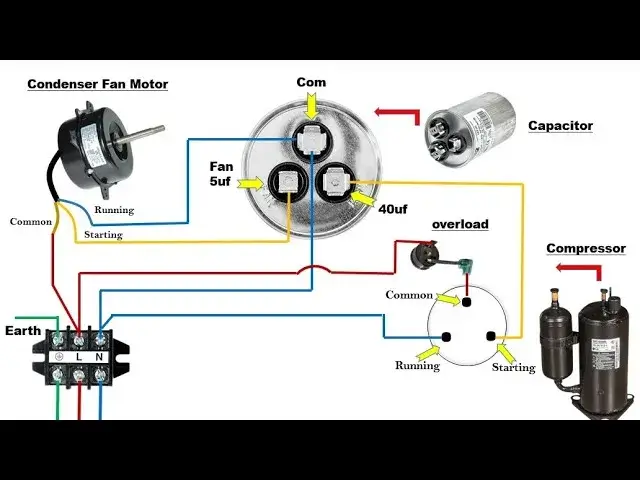
The type of motor used in an Air Conditioner affects how it runs, so we always keep this in mind when choosing what suits our needs.
- A non-inverter AC uses a compressor that works on a fixed start and stop cycle, and this can lead to more power usage. Over time, that adds to the total electricity bill.
- With an inverter AC, the motor adjusts speed based on the cooling needs. This helps save electricity and makes the cooling experience smoother for us when using it for long periods.
Verdict – An inverter AC with a variable frequency motor generally performs more efficiently compared to a non inverter AC.
Working Noise:
When we buy an Air Conditioner, one thing we always pay attention to is the level of noise during use. No one likes being disturbed by constant mechanical sound.
- A non inverter AC tends to create noticeable noise because its compressor switches on and off repeatedly. This constant cycling puts pressure on the compressor, which is what causes the sound.
- With an inverter AC, the compressor does not need to switch on and off repeatedly since it adjusts itself automatically based on cooling demand. As a result, we usually experience quieter and smoother operation.
Verdict – An inverter AC typically runs with minimal noise compared to a non inverter AC.
Energy-Efficiency:
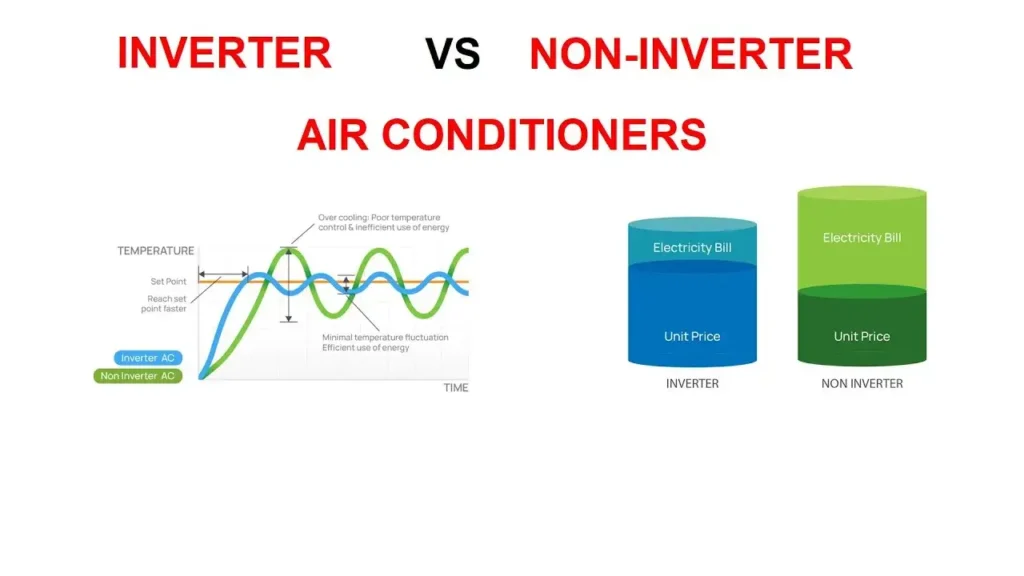
Most of us want an Air Conditioner that gives steady cooling while also keeping electricity costs under control. That is something we think about carefully before buying.
- A non inverter AC is not as effective at saving energy during operation. Since its compressor is under heavy load due to constant on-off cycling, it struggles to maintain good energy efficiency.
- In contrast, an inverter AC can help save a significant amount of electricity because it adjusts its cooling output based on real-time need. We have seen that this controlled performance can reduce power use in a practical way.
Verdict – An inverter AC is generally more energy efficient compared to a non inverter AC.
Air Filters:
One key feature we always look at in an Air Conditioner is the quality of its air filters. These filters help ensure that the air we breathe is clean and safe.
- A non-inverter AC usually comes with standard filtration. While it does reduce contaminants to some extent, the filtering is not strong enough for deeper air cleanliness, and extended exposure may bother sensitive users.
- On the other hand, an inverter AC often includes advanced filtration options such as HEPA and carbon-based filters. These filters help deliver cleaner air, which supports healthier indoor breathing over long use.
Verdict – An inverter AC is generally better equipped with advanced air filters, offering cleaner and safer air compared to a non inverter AC.
Faster Cooling:
When we buy an Air Conditioner, the main expectation is steady cooling. There is no point in choosing a unit that cannot deliver cool air when needed, so it helps to understand how both types manage cooling.
- A non inverter AC takes time to cool the room because its compressor must reach a fixed operating level before it can provide strong cooling. Users often wait until it settles into its working rhythm before feeling real relief.
- With an inverter AC, cooling starts much faster due to its variable-speed compressor. It adjusts speed based on need, so we feel quicker and smoother cooling without long waiting periods.
Verdict – An inverter AC cools the room more quickly and consistently compared to a non inverter AC.
Price:
For many of us, price plays a major role when choosing an Air Conditioner, and that makes sense because we want to spend our money wisely.
Let us look at what we usually spend on each type.
- A non inverter AC is generally more budget-friendly. We can usually find a good non inverter AC in the range of 25,000 to 35,000, which makes it accessible for many households.
- A quality inverter AC usually costs more, with prices starting from around 30,000 to 35,000. But from our experience, the benefits in terms of smooth cooling, quieter performance, and better energy control often justify the added cost.
Verdict – A non inverter AC is cheaper to purchase than an inverter AC, making it the easier upfront buy.
Lifespan:
Most of us want an Air Conditioner that can last for many years while keeping its performance steady. Understanding how each type works helps us estimate how long it may serve us.
- A non inverter AC usually has a shorter lifespan because its compressor turns on and off repeatedly during operation. This repeated cycling puts stress on the motor over time, affecting its performance and durability.
- A well-maintained inverter AC runs at adjustable speeds, so the compressor is not under constant heavy load. Since it avoids harsh on-off cycling, the motor stays in better condition, with less wear and tear during daily use. In our view, this helps it last longer with consistent performance.
Verdict – An inverter AC generally lasts longer and maintains better performance over time compared to a non inverter AC.
Performance:
In the end, we also look at overall performance because it shows how well an Air Conditioner can maintain a comfortable room temperature even when outdoor heat rises.
- A non inverter AC works at a fixed level. Its cooling stays within a set range, offering relief from outdoor heat, but the temperature control feels limited.
- An inverter AC adjusts cooling based on actual need. The compressor fine-tunes its speed, helping maintain a steady and pleasant room temperature. From our experience, this leads to smoother and more responsive cooling.
Verdict – An inverter AC usually delivers stronger and more consistent performance than a non inverter AC.
Besides these factors, we also take note of the warranty when selecting an inverter AC vs Inverter AC. It is important to choose a model that offers solid coverage so that any operational issues can be handled with ease and peace of mind.
Inverter AC vs Non Inverter AC Comparison Table:
| Feature | Inverter AC | Non Inverter AC |
| Compressor Type | Variable speed | Fixed speed |
| Cooling Speed | Faster and consistent | Slower and uneven |
| Energy Efficiency | High energy savings over time | Higher power consumption |
| Electricity Bill Impact | Lower monthly cost | Higher monthly cost |
| Noise Levels | Quieter operation | Noticeable noise |
| Lifespan | Longer due to reduced strain | Shorter due to constant cycling |
| Price | Higher upfront cost | Cheaper initial price |
| Ideal Usage | Usually lower in the long-term | Short, occasional usage |
| Air Quality | Often includes advanced filtration | Basic filtration |
| Maintenance | Usually lower in the long term | Higher due to compressor wear |
| Temperature Stability | Smooth and stable | Fluctuates more |
| Overall Value | Better long-term investment | Better short-term budget option |
Air Conditioner Advantages and Disadvantages
Both Inverter AC and Non inverter AC types come with their own Advantages and Disadvantages, which we have listed clearly below.
Inverter AC Advantages:
- Energy-efficient
- Delivers value for money
- Designed for dedicated performance with a variable speed motor
- Better lifespan
- Noiseless working
Inverter AC Disadvantages:
- Expensive
Now, let us look at the other Air Conditioner type and go through its Advantages and Disadvantages.
Non-inverter AC Advantages:
- Inexpensive
Non-inverter AC Disadvantages:
- Noisy
- Limited lifespan
- Not so good with energy efficiency
Final Verdict
Our preference leans toward the inverter AC among the two types. Based on our use and observations, an inverter AC performs better than a Non inverter AC in practical areas such as energy control, lower bills, cooling response, and comfort.
An inverter AC is known for steady performance and usually needs less attention in terms of upkeep. In our view, it delivers good cooling, smoother operation, and long-term value for money, making it a strong option for most homes.
That said, a Non inverter AC remains popular in the market mainly due to its lower upfront price, which suits buyers with a tight budget. But if someone is thinking about long-term savings and better control over power usage, we would still recommend choosing an inverter AC.
If you want our help in deciding between Inverter AC vs Non inverter AC, you can ask your questions, and we will support you with clear and practical guidance.
Frequently Asked Questions ( FAQs ) on Inverter AC vs Non Inverter AC
1. Is an Inverter AC really worth buying?
Yes, if you use your AC frequently or for long hours, an inverter AC can save electricity, reduce noise, and offer steady cooling, making it worth the investment.
2. Does an Inverter AC save money on electricity bills?
Yes. Because it adjusts its compressor speed, it uses less power over time, which results in lower electricity bills.
3. Which AC cools faster: inverter or Non inverter?
An inverter AC cools faster because its compressor can ramp up speed immediately and adjust cooling dynamically.
4. Does a Non inverter AC consume more electricity?
Yes. It repeatedly switches on and off, which uses more power during every start cycle and increases overall consumption.
5. Which AC lasts longer: Inverter or Non inverter?
An inverter AC usually lasts longer because the compressor is under less mechanical stress and runs more smoothly.
6. Is an Inverter AC better for small rooms or large rooms?
It works well for both, but it’s especially beneficial for medium to large rooms or spaces where the AC runs continuously.
7. Do Inverter ACs require more maintenance?
Not necessarily. They usually require standard maintenance, and because they operate with less strain, we have found they often age better with time.
8. Why is an inverter AC more expensive?
It uses advanced technology, variable-speed compressors, and better components, so the cost is higher upfront, but savings come later in electricity costs.
9. Does an Inverter AC work better in extreme heat?
Yes. Because it can continuously adjust compressor speed, it handles higher outdoor temperatures more efficiently than a non inverter AC.
10. Is Non inverter AC still a good option?
Yes, if you want a cheaper AC upfront and you won’t use it for very long daily, a non inverter AC can be a practical choice.
11. Is an Inverter AC better than Non inverter AC?
An inverter AC controls compressor speed for smoother cooling and lower energy use, making it a better long-term choice for performance and savings.
12. Which AC consumes more electricity Inverter or Non inverter?
A Non inverter AC consumes more electricity since its compressor cycles on and off constantly, while an inverter AC adjusts speed for efficient power use.
13. Is an Inverter AC worth buying in India?
Yes, an inverter AC is worth buying due to energy savings, quieter operation, longer lifespan, and consistent cooling, especially in hot Indian climates.
14. Does an Inverter AC require more maintenance?
An inverter AC generally requires less maintenance because the compressor experiences less strain, reducing wear and extending its working life.
15. Which lasts longer Inverter AC or on inverter AC?
An inverter AC usually lasts longer since its compressor runs at variable speeds instead of frequently stopping and starting like a non inverter AC.
16. Does Inverter AC cool faster?
Yes, an inverter AC cools faster because it adjusts compressor speed to match real-time cooling needs, providing quicker temperature comfort.
17. Why is Inverter AC expensive?
An inverter AC costs more due to advanced compressor technology that provides quieter operation, better cooling control, and long-term electricity savings.
18. Is Non inverter AC good for small rooms?
A Non inverter AC can work for small rooms where cooling demands are limited, but it may increase electricity costs during frequent or long usage.
19. Does Inverter AC reduce electricity bills?
Yes, an inverter AC helps reduce electricity bills by continuously regulating compressor speed, using only the required power for cooling.
20. Which AC type makes more noise?
A Non inverter AC usually makes more noise because its compressor switches on and off repeatedly, while an inverter AC runs smoothly at controlled speeds.