

This is one of the most common questions I hear when people plan a modular kitchen. Based on my experience, How to Use Kitchen Chimney Properly is not something to fear at all. I always explain it like cooking with an open window placed right above the gas stove, where smoke and oil fumes escape easily.
When I understand kitchen chimney usage correctly, daily cooking becomes cleaner and safer. Still, there are a few important factors I must keep in mind before buying and using a kitchen chimney properly.
Table of Contents
- 1 How to Use Chimney in Kitchen?
- 2 Conclusion
- 3 Frequently Asked Questions ( FAQs )
- 3.1 1. How to Use Chimney in Kitchen properly for daily cooking?
- 3.2 2. Is it safe to use a Kitchen Chimney every day?
- 3.3 3. Should the Kitchen Chimney be turned on before or after cooking?
- 3.4 4. What is the correct height to install a Kitchen Chimney?
- 3.5 5. Which Chimney Filter is Best for Indian Cooking?
- 3.6 6. How often should we clean a Kitchen Chimney?
- 3.7 7. Does a Kitchen Chimney consume a lot of electricity?
- 3.8 8. Can a Kitchen Chimney work without an exhaust outlet?
- 3.9 9. Why does smoke still remain even after using a Kitchen Chimney?
- 3.10 10. What mistakes should we avoid while using a Kitchen Chimney?
How to Use Chimney in Kitchen?
When people ask me How to Use Chimney in Kitchen, I usually tell them it is more about habit than technology. From my experience, a kitchen chimney works best when I treat it like part of my cooking routine, not an extra appliance. I always switch on the chimney suction before lighting the gas stove so the kitchen smoke removal starts immediately.
While cooking oily or spicy food, I adjust the chimney speed settings instead of letting smoke spread across the kitchen. One mistake I made earlier was ignoring chimney filter cleaning, which reduced chimney suction power over time. Now, I clean the baffle filter chimney regularly and notice better chimney performance.
I also keep an eye on chimney safety, especially while frying, because unattended oil can cause fire hazards. When I follow these simple steps, my kitchen ventilation improves, cooking feels easier, and the kitchen chimney lifespan increases naturally.
Size
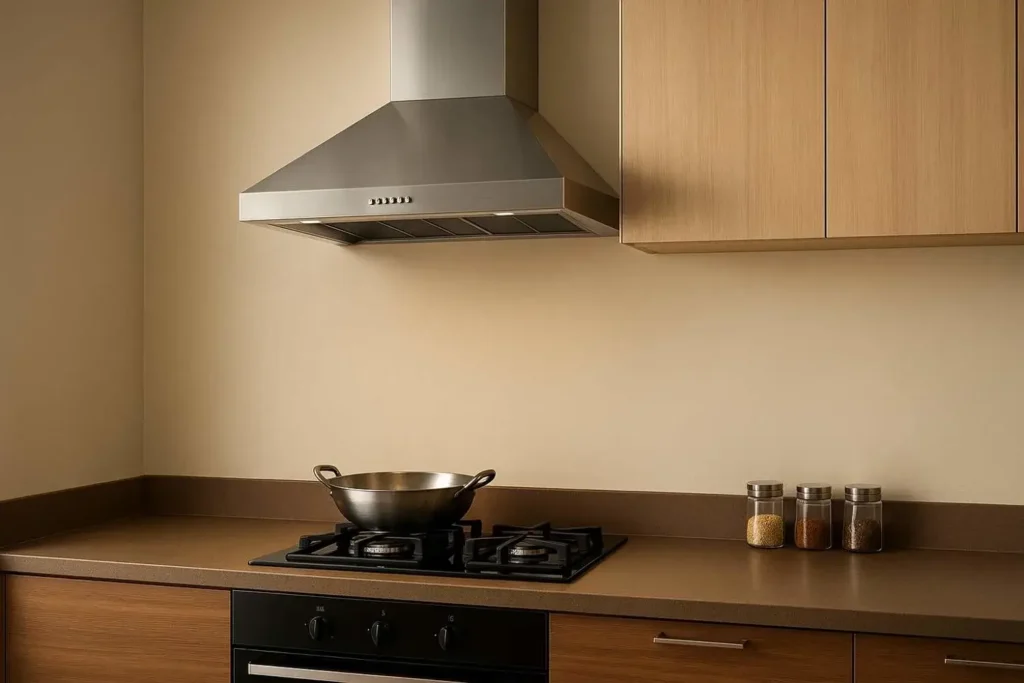
The first and most important thing I check is the kitchen area space. From my experience, it always helps to visualize or sketch whether the space is sufficient for complete kitchen chimney installation from bottom to top.
Secondly, I recommend choosing a chimney size that is slightly bigger than the gas stove size, or at least the same size. I have seen that using a smaller chimney compared to the gas stove reduces chimney suction efficiency, so I always avoid that mistake.
Thirdly, I ensure the kitchen chimney height from stove is between 26 to 30 inches minimum. In my observation, an ideal setup includes proper height and chimney suction power ranging between 400 and 1000 cubic meters per hour, which works best for Indian cooking.
Fourthly, I always check the chimney outlet area. It must be open and free from nearby buildings. If not, I have noticed that kitchen smoke removal becomes ineffective, and sometimes neighbors also face issues due to trapped smoke.
Steel, Aluminum or PVC
If budget is not a concern, I personally prefer stainless steel kitchen chimneys. From my long-term use, stainless steel stands out due to its strength, easy cleaning, and lasting shine.
Although aluminum kitchen chimneys and PVC kitchen chimneys are available, I have seen their demand decline. I chose stainless steel because it offers better chimney durability, remains glossy, and supports long-term kitchen chimney maintenance.
Different Filters
One of the most important aspects I consider while learning How to Use Kitchen Chimney Properly is understanding chimney filter types. There are mainly three filters available: Cassette or Mesh Filter, Baffle Filter, and Carbon Filter.
From my experience, a cassette filter chimney requires weekly cleaning, which makes maintenance slightly difficult. A baffle filter chimney is easier to manage, as I usually clean it once a month. A carbon filter chimney is not washable and must be replaced every 3 to 4 months, which I factor into maintenance costs.
Proper Usage
Proper usage plays a major role in chimney lifespan. From my daily cooking routine, I switch on the kitchen chimney only when required. I also make sure chimney filter cleaning is done periodically to maintain chimney performance.
Cleaning frequency depends on how much oily and spicy food I cook. If my kitchen smoke level is high, I clean the chimney once a month. If my cooking style produces less smoke, cleaning once every two months works well for me.
While frying, I never leave hot oil unattended. I have learned that unattended oil can cause fire hazards, even when the chimney motor is running. I also ensure the running kitchen chimney is kept away from children for safety.
Conclusion
To conclude, I shared these points to give a clear and practical understanding of How to Use Kitchen Chimney Properly. From my experience, just like any electronic appliance, a kitchen chimney needs regular cleaning and maintenance to improve chimney durability and performance.
Now that I understand chimney size, chimney material, filter types, and proper usage, it becomes easier for me to choose the right model based on budget, kitchen size, and routine maintenance needs. When I follow these habits, the kitchen chimney works efficiently for years.
Frequently Asked Questions ( FAQs )
1. How to Use Chimney in Kitchen properly for daily cooking?
From my daily experience, How to Use Chimney in Kitchen Properly starts by switching it on 2 to 3 minutes before cooking. I keep the suction speed low for boiling and medium to high for frying. This habit improves kitchen smoke removal and reduces chimney grease buildup.
2. Is it safe to use a Kitchen Chimney every day?
Yes, I use my kitchen chimney daily, and it is completely safe. Regular usage prevents oil accumulation, improves indoor air quality, and keeps the chimney motor healthy when combined with proper chimney maintenance.
3. Should the Kitchen Chimney be turned on before or after cooking?
Based on my usage, I always turn on the kitchen chimney before cooking starts. This creates proper chimney airflow and supports How to Use Chimney in Kitchen Properly during heavy smoke cooking.
4. What is the correct height to install a Kitchen Chimney?
In my experience, the correct kitchen chimney height from stove is 26 to 30 inches. This height ensures strong chimney suction power without overheating the motor or reducing efficiency.
5. Which Chimney Filter is Best for Indian Cooking?
From what I have tested, a baffle filter chimney works best for Indian kitchens. It handles oily smoke well and requires less frequent chimney filter cleaning, making chimney maintenance easier.
6. How often should we clean a Kitchen Chimney?
I clean baffle filters once a month when cooking is heavy. For lighter cooking, I clean every two months. Proper chimney cleaning frequency improves chimney performance and lifespan.
7. Does a Kitchen Chimney consume a lot of electricity?
From my electricity bills, chimney energy consumption is low. A standard kitchen chimney uses power similar to a ceiling fan, making daily usage economical.
8. Can a Kitchen Chimney work without an exhaust outlet?
In my experience, ductless kitchen chimneys with carbon filters work, but they are less effective than ducted models. For How to Use Chimney in Kitchen Properly, I prefer chimneys with an external outlet for better smoke extraction.
9. Why does smoke still remain even after using a Kitchen Chimney?
I have noticed this happens due to the wrong chimney size, incorrect chimney installation height, clogged filters, or low chimney suction capacity. Fixing these issues restores proper kitchen ventilation.
10. What mistakes should we avoid while using a Kitchen Chimney?
From my mistakes, I avoid switching on the chimney late, skipping chimney filter maintenance, using incorrect speed settings, and ignoring unusual chimney noise issues. Avoiding these mistakes helps me follow How to Use Chimney in Kitchen Properly every day.